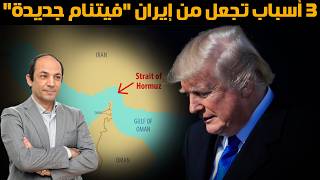
كيف أوقفت السعودية والكويت مغامرة عسكرية جديدة لترامب ضد إيران؟ ولماذا؟
TL;DR
Saudi Arabia and Kuwait's refusal to support Trump's 'Operation Freedom' against Iran forced its cancellation, highlighting a new US proposal awaiting Iran's response amidst market optimism that overlooks geopolitical risks.
Key insights
Saudi Arabia and Kuwait's Intervention Thwarted Trump's Military Ambitions Against Iran
- The Gulf states, specifically Saudi Arabia and Kuwait, refused to cooperate with the US in executing 'Operation Freedom,' a plan to open the Strait of Hormuz.
- Their refusal was based on fears of Iranian retaliation against their vital infrastructure, which would lead to greater losses due to Trump's ill-considered decisions.
- US officials indicated they would not intervene if Iran attacked these countries, as their focus was on peace negotiations, not escalating conflict.
Trump's 'Operation Freedom' Was Abruptly Halted Due to Strategic Miscalculations and Gulf State Opposition
- Trump announced 'Operation Freedom' to open the Strait of Hormuz under a humanitarian guise, but it failed within 36 hours.
- The operation was abandoned not due to a desire for diplomacy, but because of the anticipated cost, confrontation, and Iran's strong response.
- The Gulf states' refusal to allow US forces to operate from their territories made the mission difficult to execute effectively.
The Iran-US Conflict Exhibits Characteristics of Protracted Wars, Yet Market Optimism Persists
- Political analysts suggest the conflict has hallmarks of 'forever wars,' including Iran's persistent resistance, flawed US leadership, and lack of oversight.
- Despite the potential for a long-term, low-intensity conflict, financial markets have shown significant optimism, largely ignoring the geopolitical risks.
- Economists caution that this market optimism is excessive, comparing the situation to the band playing on the Titanic as it sinks.
A New US Proposal for Iran Was Submitted, Awaiting Tehran's Response Amidst Escalating Tensions
- The White House sent a one-page proposal with 14 points to Iran to end the conflict, with a 48-hour deadline for a response.
- Iran acknowledged receiving the proposal and stated they would respond at their convenience, rejecting threats and deadlines.
- Trump warned of severe consequences if Iran did not respond positively, hinting at a more aggressive version of 'Operation Freedom'.
Key moments
- 00:51Trump announced 'Operation Freedom' to open the Strait of Hormuz, but Iran's response and the lack of support from key allies like Saudi Arabia and Kuwait led to its swift cancellation.
- 03:34The Gulf states, particularly Saudi Arabia and Kuwait, refused to allow US forces to use their territory, fearing Iranian retaliation and highlighting the strategic miscalculations behind the US initiative.
- 06:08The White House presented a new one-page proposal to Iran to end the conflict, awaiting Tehran's response amidst escalating tensions and Trump's threats of a more forceful approach.
- 08:56Political analysts identify three characteristics of long-term wars in the US-Iran conflict: Iran's persistent resistance, flawed US leadership focused on historical victories, and a lack of oversight on decision-makers.
- 12:11Despite the potential for a protracted conflict, financial markets remain overly optimistic, ignoring the geopolitical risks and continuing to celebrate, a situation economists liken to the Titanic's final moments.