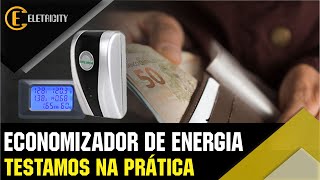
ECONOMIZADOR DE ENERGIA FUNCIONA? TESTAMOS NA PRÁTICA. 💸
TL;DR
This video tests a popular 'energy saver' device and concludes it's a scam, demonstrating through practical tests that it does not reduce energy consumption and may even slightly increase it.
Key insights
Energy saving devices are largely a scam.
- Manufacturers are unwilling to send these devices for testing, suggesting a lack of confidence in their efficacy.
- The devices often work by masking the electrical current, not by reducing actual power consumption.
- The primary way to save energy is through behavioral changes and using efficient appliances.
Testing methodology is crucial for debunking false claims.
- The video systematically tests the 'energy saver' with various common household appliances (hair dryer, motor, microwave, refrigerator).
- Measurements of both current and power (watts) are taken to accurately assess performance.
- The tests demonstrate that the device does not reduce active power consumption (watts), which is what utility companies charge for.
Understanding electrical concepts like power factor is key.
- The 'energy saver' may alter the power factor, leading to a perceived reduction in current, but not actual energy savings.
- Residential energy bills are based on active power (watts), not apparent power (VA) or current alone.
- The device itself consumes a small amount of energy, potentially increasing the overall bill.
Real energy saving methods are simple and effective.
- Reducing usage time for high-consumption appliances like showers.
- Turning off lights when not in use.
- Purchasing appliances with energy efficiency labels (e.g., from INMETRO).
Key moments
- 00:00Introduction: The promise of energy saving devices and the channel's attempt to get a sample for testing.
- 00:44The specific 'energy saver' device purchased for testing is shown and briefly examined.
- 01:17The simple internal structure of the device is revealed: just a basic electronic circuit.
- 02:19Testing begins with a hair dryer (resistive load) – no significant change in power or current is observed.
- 03:59Test with a single-phase motor (inductive load) shows a slight current reduction but no significant power change.
- 05:23The final test with a refrigerator shows a decrease in current but an increase in active power, confirming the device's ineffectiveness and potential to increase consumption.