Introduction to Descriptive and Analytic Epidemiology
TL;DR
This video introduces descriptive epidemiology (focusing on person, place, time) and analytic epidemiology (examining relationships between variables, particularly the host, agent, and environment), highlighting their sequential and complementary roles in understanding and controlling diseases.
Key insights
Descriptive epidemiology lays the groundwork for analytic epidemiology.
- Descriptive epidemiology focuses on understanding disease patterns by examining 'person,' 'place,' and 'time'.
- It helps in identifying where to look for health issues and what factors might be involved.
- Analytic epidemiology builds upon descriptive findings to test hypotheses and determine causal relationships.
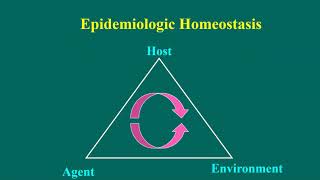
The 'Epidemiologic Triangle' is a core concept in understanding disease causation.
- The triangle consists of three key elements: host, agent, and environment.
- A balance (homeostasis) between these elements is necessary for health; disruption leads to disease.
- Understanding the interplay of host, agent, and environment is crucial for disease prevention and control strategies.
Both descriptive and analytic epidemiology serve distinct but complementary roles in public health.
- Descriptive epidemiology provides the 'what, who, where, and when' of disease, aiding in resource allocation and hypothesis generation.
- Analytic epidemiology tests these hypotheses, identifies risk factors, and determines the strength of associations between exposures and outcomes.
- The insights from descriptive studies inform the design and focus of analytic studies.
Key moments
- 00:45Introduction to descriptive and analytic epidemiology, noting that descriptive epidemiology precedes analytic epidemiology and helps in identifying where to look and what to control for.
- 02:00Explanation of the three central characteristics of disease in descriptive epidemiology: person, place, and time.
- 03:47Detailed discussion on 'place' in descriptive epidemiology, covering climate, presence of agents/vectors, population density, economic development, and medical practices.
- 05:03Exploration of 'time' in descriptive epidemiology, including calendar time, time since an event, physiologic cycles, seasonality, and temporal trends in exposure-outcome relationships.
- 07:24A practical example scenario is presented for groups to discuss, involving an event with exposed and deceased individuals, prompting questions about person, place, and time.
- 10:05Transition to analytic epidemiology, emphasizing the need to examine relationships between variables and introducing the core elements: host, agent, and environment.
- 11:50Explanation of the 'epidemiologic triangle' (host, agent, environment) and the concept of homeostasis or balance, noting that disruption leads to disease.
- 13:09Discussion on factors influencing the 'host,' including personal traits, genetic predisposition, immunologic factors, and behavior, and how they affect disease susceptibility.
- 13:42Detailed explanation of the 'agent' as the cause of disease, which can be biological (pathogens), physical, or chemical.
- 15:01Focus on the 'environment' and its role in disease transmission and agent survival, using malaria as an example of a conducive environment for mosquitoes.
- 16:57Recap of the importance of the epidemiologic triangle for disease prevention and control, emphasizing that epidemics arise when these elements are out of balance.
- 19:21Summary of descriptive epidemiology's focus on distribution and frequency, its importance for resource allocation and hypothesis development.
- 21:56Reiteration of analytic epidemiology's focus on relationships between variables, determinants of disease, and hypothesis testing, using the example of gender as a potential risk factor.
- 23:11Concluding remarks on analytic epidemiology's role in assessing relationships between exposures and diseases and the upcoming discussion on study designs.