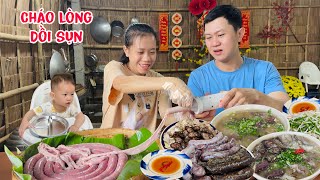
Món ngon ngày Tết - Cháo Lòng Dồi Sụn nhà làm với cách làm đơn giản mà lại ngon
TL;DR
A step-by-step guide to making Vietnamese blood sausage (dồi sụn) at home, featuring traditional preparation methods and ingredients for a festive meal.
Key insights
Homemade Vietnamese Blood Sausage (Dồi Sụn) Recipe
- The video demonstrates a simple and delicious homemade recipe for Vietnamese blood sausage, often enjoyed during Tet.
- Key ingredients include various pork parts like intestines, stomach, blood, and meat, along with herbs and spices.
- The process involves meticulous cleaning and preparation of the ingredients, followed by stuffing them into casings.
- The sausages are then boiled to cook and set, and finally fried to achieve a crispy exterior.
Traditional Vietnamese Cooking Techniques
- The video showcases traditional methods of preparing offal dishes, emphasizing the importance of thorough cleaning.
- The use of fresh herbs like cilantro and mint adds aromatic complexity to the dish.
- The cooking process highlights the balance between boiling and frying for optimal texture and flavor.
Family and Festive Meal Preparation
- The content is presented in a home-style setting, suggesting a focus on family recipes and traditional celebrations like Tet.
- The presence of a child in the background adds a relatable, domestic touch to the cooking demonstration.
- The overall tone is warm and inviting, encouraging viewers to try making the dish themselves.
Key moments
- 00:00Introduction with visuals of butterflies and flowers, transitioning to the cooking setup.
- 00:39The host introduces the dish: homemade blood sausage (cháo lòng dồi sụn) and its ingredients.
- 01:02Detailed presentation of the various pork offal and ingredients, including blood, intestines, stomach, and pork skin.
- 01:14Mention of additional ingredients like herbs (cilantro, mint) and seasonings for flavor.
- 01:38The host begins the preparation by handling the raw ingredients, wearing gloves.
- 02:12The host starts slicing the pork neck meat, preparing it for grinding.
- 02:51The sliced meat is placed into a bowl, followed by other prepared ingredients.
- 03:14The host continues slicing and preparing other pork parts, like the intestines and stomach.
- 03:49The host uses a food processor to grind the meat and ingredients for the sausage filling.
- 05:09The host is shown cutting the pork blood into cubes.
- 05:56The host demonstrates stuffing the sausage casings using a sausage stuffer, with the help of another person.
- 08:16The host is shown harvesting fresh herbs from a garden for the dish.
- 09:02The harvested herbs (scallions, cilantro, culantro) are chopped and added to the meat mixture.
- 09:45Seasonings like salt and pepper are added to the mixture.
- 10:00The host adds sugar and fish sauce to the mixture.
- 10:57The mixture is thoroughly mixed by hand, ensuring all ingredients are well combined.
- 11:42The prepared sausages are being boiled in a large pot with aromatics like ginger and onion.
- 12:12The host shows the boiled pork intestines and stomach, which have been cleaned and prepared.
- 13:14The host uses a sausage stuffer to fill the casings with the meat mixture.
- 15:09The process of stuffing the sausages continues, with the host demonstrating how to tie them off.
- 16:46The host is shown arranging the stuffed sausages on a banana leaf.
- 17:23The host is shown cutting the pork blood into cubes.
- 18:08The host is shown frying the sausages in a wok with oil.
- 25:25The host is shown adding the cubed pork blood to the boiling broth.
- 26:06The host adds chopped scallions and herbs to the boiling broth.
- 27:45The fried sausages are removed from the wok and placed on a cutting board.
- 28:22A platter of cooked sausages and other pork parts is presented.
- 29:00The host serves the congee (cháo lòng) into bowls.
- 30:30The family sits down to eat, with the baby also being fed.