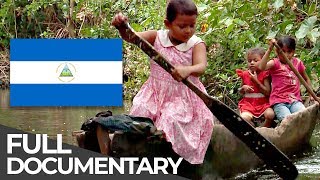
Most Dangerous Ways To School | NICARAGUA | Free Documentary
TL;DR
Children in rural Nicaragua face life-threatening daily journeys through dangerous jungles and rivers, enduring extreme weather and poverty, all for the chance to receive an education and secure a better future.
Key insights
Education is a highly valued but dangerous pursuit in rural Nicaragua.
- Children undertake perilous journeys daily to reach school, facing threats from nature and challenging terrain.
- Despite the dangers, the children are driven by a strong desire for a better future through education.
- The community and families recognize the importance of education, even if they themselves are illiterate.
The journey to school is fraught with natural dangers.
- The Rio Escondido presents risks of drowning due to the dilapidated canoe, strong currents, and the presence of alligators.
- The jungle paths are inhabited by venomous snakes (coral snakes, boa constrictors) and other dangerous animals like buffalo.
- Extreme weather conditions, including intense rain and heat, exacerbate the dangers and physical exertion.
Poverty significantly impacts the children's daily lives and educational opportunities.
- Families struggle with basic necessities, with 70% of the rural population living in poverty.
- Children must complete extensive household chores before attending school, limiting their time and energy.
- School supplies are expensive, and access to clean water and adequate nutrition are ongoing challenges.
Community and family support are crucial for the children's education.
- Mothers express deep concern for their children's safety but encourage their pursuit of education.
- The 'Zero Hunger' program provides a vital daily meal, mitigating malnutrition.
- Teachers like Mrs. Miller understand the challenges and are dedicated to educating these students despite irregular attendance.
Key moments
- 00:00Introduction to the dangerous school routes in Nicaragua, highlighting the children's determination for a better life.
- 00:46Description of the remote and wild region of eastern Nicaragua, emphasizing the lack of roads and the importance of the Rio Escondido.
- 02:31Introduction to the Gonzalez-Florez family and their daughters Julia, Julissa, and Kenya, who live a simple life without running water or electricity.
- 04:15The sisters undertake extensive morning chores before their dangerous journey, highlighting their poverty and the mother's aspirations for their future.
- 06:18Introduction to Craven Lopez, an 11-year-old classmate whose journey involves navigating the 'snake field' through the jungle.
- 08:29The three sisters begin their journey by preparing their dilapidated dugout canoe, which requires constant bailing.
- 10:13Craven encounters an obstacle: a herd of buffalo blocking his path through the jungle.
- 11:18Craven enters the dense jungle, facing constant fear of poisonous animals like tarantulas and frogs.
- 12:02The sisters launch their heavy dugout canoe, facing challenges with its weight and the need to navigate a mangrove swamp.
- 13:18The sisters must turn their dugout and navigate the river, with Kenya taking the lead in steering.
- 14:20Water seeps into the canoe, and even young Julissa must help bail, highlighting the precariousness of their journey.
- 15:34Craven nears the end of the jungle, facing the 'snake field' as he approaches the village.
- 16:40Craven's fear of snakes is amplified by a recent encounter with a boa constrictor in the snake field.
- 17:55Craven's mother expresses her fear for his safety due to the dangers of his overland journey.
- 19:00The sisters face a lake crossing and a sudden downpour, increasing the water in their canoe.
- 21:10The children arrive at the village school in San Mariano, where their teacher, Mrs. Miller, acknowledges their struggles.
- 21:40The narrator reiterates the dangers of Craven's route, specifically mentioning the poisonous coral snake.
- 23:00The sisters, tired from paddling against the current and the day's exertions, approach their destination.
- 23:50The intense rainfall in the region is highlighted, contributing to the challenges.
- 24:12Dona Julia, the sisters' mother, works in the fields, constantly worried about her daughters' safety.
- 25:54The sisters finally reach the shore of San Mariano and must secure their dugout canoe.
- 26:30The sisters share a school bag and arrive safely, though dirty, at school.
- 27:00Craven also arrives at school, and classes begin late with the Lord's Prayer.
- 28:20Inside the multi-age classroom, Mrs. Miller manages the diverse learning needs of her students.
- 29:20Despite fatigue, the older students work hard, but younger ones like Julissa struggle to concentrate.
- 30:00The teacher's efforts combat Nicaragua's high illiteracy rate.
- 30:30Recess provides a much-needed break for the children, who then receive a hot meal.
- 31:40The 'Zero Hunger' program provides essential meals, significantly reducing malnutrition.
- 32:30Math class is engaging, with students eager to participate.
- 33:10Classes end after five hours, and the sisters express sadness at leaving their friends.
- 33:40The sisters begin their long and energy-draining journey home, needing to bail water from their canoe again.
- 34:20Craven's journey home is delayed as he must do his mother's shopping at the village store.
- 35:30The cost of goods in the village shop is significant for local families.
- 36:00Craven heads home, facing the oppressive afternoon heat and the increased risk of encountering snakes.
- 37:20The sisters face new dangers on their way upriver, paddling against a strong current exacerbated by wind.
- 38:40The extreme heat and humidity in eastern Nicaragua make the journey home difficult for Craven.
- 39:10Craven takes a break due to thirst, highlighting the scarcity of clean drinking water in rural areas.
- 39:50Craven encounters Don Pedro and discusses the ever-present danger of snakes.
- 40:50The sisters, despite fatigue, carefully navigate the mangroves, with Kenya watching over Julissa.
- 41:30Due to the strong current, the sisters are late getting home, worrying their mother.
- 42:30The girls finally reach home after more than 10 hours of work and travel, too tired to play.
- 43:00The sisters are relieved to be home, having survived another dangerous day.
- 43:30The possibility of downpours during the rainy season is a constant concern.
- 44:10Craven struggles through the final leg of his journey home in the oppressive heat.
- 45:20Craven helps his family cook coconut oil, their livelihood, earning a small amount for their labor.
- 46:00Craven has survived his dangerous journey and can now relax with his family.
- 47:00The sisters finally reach their home village, exhausted but happy to see their mother.
- 47:50The family prepares dinner, and the girls rest after their long day.
- 48:30Kenya expresses her dream of becoming a teacher, having taken a step closer through her education.
- 48:50The day ends as twilight falls, with the exhausted girls resting, ready for another challenging day.