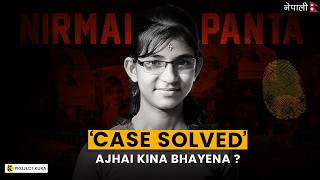
Nirmala Panta Case: Who made It Impossible to Solve?
TL;DR
The Nirmala Panta case investigation was severely hampered by initial police negligence, compromised evidence handling, widespread misinformation, political interference, and a breakdown of public trust, leaving the crime unsolved despite extensive resources and multiple inquiries.
Key insights
Systemic Failures in the Nirmala Panta Case Investigation
- Initial police response was slow and lacked urgency, failing to secure the crime scene effectively.
- Evidence collection and preservation were compromised, leading to contamination and unreliable DNA testing.
- Media sensationalism and the spread of unverified information, often fueled by personal vendettas, significantly complicated the investigation.
- Political interference and pressure from various stakeholders undermined the integrity of the investigative process.
The Role of Misinformation and Public Distrust
- Rumors and conspiracy theories, particularly involving VIPs and local figures, spread rapidly through media and social platforms.
- Lack of transparency and perceived mishandling of evidence by the police eroded public trust from the outset.
- Journalists and media outlets, driven by sensationalism or personal motives, often amplified unverified claims, further confusing the public.
- The prolonged lack of justice fueled public anger and protests, creating an environment of distrust towards law enforcement and government institutions.
Challenges in Forensic Evidence Handling
- The collection of DNA samples was done using inadequate methods, potentially leading to insufficient quantity and degraded quality.
- The use of Y-STR sequencing instead of autosomal STR sequencing limited the ability to definitively identify an individual.
- Contamination of crime scene evidence due to poor security and handling procedures raised doubts about the reliability of forensic findings.
- The inconsistent application of forensic protocols and the reliance on potentially compromised evidence hindered the progress of the investigation.
Impact of Personal and Political Agendas on Justice
- Personal disputes between journalists and police officials influenced the reporting and public perception of the case.
- Political figures and government bodies were accused of interfering with the investigation to protect certain individuals or manage public opinion.
- The case became a political tool, with different parties using it to gain public support or criticize opponents.
- The prolonged investigation and lack of resolution highlighted broader issues of accountability and effectiveness within Nepal's justice system.
Key moments
- 00:00Introduction highlighting the initial efforts of journalists in uncovering early evidence and the subsequent formation of multiple investigation committees over eight years, emphasizing the significant resources spent without a resolution.
- 01:02Introduction to Nirmala Panta's home and school, detailing her movements on the day of her disappearance, including her plan to study at a friend's house and the initial interactions with her friend Rosni.
- 03:10Nirmala's mother's growing concern as her daughter doesn't return home, her visit to Rosni's house, and the initial interactions with Rosni's family, leading to a report at the local police post.
- 04:43Conflicting accounts regarding the police's response to the missing person report, with allegations of delays and dismissiveness from different police units.
- 05:47Discovery of Nirmala's body in a sugarcane field and her bicycle in a nearby canal, marking the beginning of the murder investigation and the subsequent crisis of trust in evidence management and police procedures.
- 06:52Contextualizing Nirmala's case with a previous similar incident in Kanchanpur, highlighting existing security concerns and the growing public distrust towards the police's handling of the investigation, including controversial actions like washing the victim's clothes.
- 07:51Public protests erupting due to alleged police attempts to protect the culprit, leading to clashes and further escalation of the situation, culminating in the demand for a central investigation team.
- 08:54The arrival of a CID team led by DSP Angur G.C. to investigate, known for solving complex cases, and the controversial agreement for Nirmala's cremation amidst police assurances.
- 09:55The investigation begins from scratch due to a lack of concrete leads, with initial arrests of Jivan Gharti and Deepak Negi, who were later released due to insufficient evidence.
- 12:01The arrest of Radha, a woman whose message and phone location raised suspicions, but who was later released after her alibi and explanations for the suspicious circumstances were verified.
- 14:06Focus shifts to the area around Rosni's house and the sugarcane field, with suspicion falling on two houses, one belonging to the then-inspector's nephew and the other to Chakradev Badu.
- 16:12Chakradev Badu becomes a prime suspect due to inconsistencies in his and his wife's statements and deleted photos from his phone, though his DNA did not match the evidence.
- 18:49Dilip Singh Bista, a man with a history of mental instability and a relative of journalist Khem Bhandari, is publicly declared the main accused, with a video showing his confession, though he later recanted, claiming coercion.
- 22:22Protests intensify after Dilip's arrest, with locals claiming he is innocent and being framed, leading to clashes, curfews, and the eventual transfer of the SP and CDO.
- 23:28A piece of cloth found 22 days later is claimed by police as evidence, but the family alleges it was planted, further eroding trust.
- 24:21CIB's reliance on Dilip's confession, which included details unknown to the public, is presented as key evidence, despite his later denial and claims of torture.
- 25:54Dilip Singh Bista is released on bail after his DNA does not match the evidence, and the family of Nirmala Panta begins to suspect him.
- 26:29Despite Dilip's release, some police investigators remain convinced of his guilt, while his niece-in-law's testimony contradicts earlier claims about his behavior towards women.
- 28:30Contradictory statements regarding the alleged torture of Dilip Bista, with some videos showing him denying torture and others implying it.
- 28:59The role of journalist Khem Bhandari in amplifying rumors and accusations, including linking VIPs to the case and his personal conflict with SP Dilli Raj Bista.
- 31:02The spread of rumors linking the SP's son and mayor's nephew to the case, particularly involving the Opera Hotel, which was later debunked by investigations.
- 33:03Analysis of CCTV footage from Opera Hotel and the market, revealing that footage was not deliberately erased but overwritten due to storage limitations and that market cameras were damaged during protests, not to conceal evidence.
- 35:03Further exploration of Khem Bhandari's motives, including his familial connection to Dilip Bista and a prior dispute with SP Dilli Raj Bista, suggesting personal agendas influenced his reporting.
- 36:07Addressing the controversial video of police washing Nirmala's clothes, clarifying it was released a month after the incident and suggesting the action might have been unintentional in a chaotic situation.
- 38:14The persistent rumors surrounding Rosni and Babita Bam, including allegations of involvement with the Opera Hotel and the disposal of the body, which were largely unsubstantiated.
- 40:45Debunking rumors about the house being repainted and the mango tree's significance, highlighting how misinformation spread even through human rights organizations.
- 43:13Confirmation that the Bam sisters were indeed questioned by the police multiple times, but no evidence of their involvement was found, despite them being initial suspects.
- 44:14The critical role and subsequent failures of DNA evidence, with over 120 individuals tested and compromised sample quality leading to inconclusive results.
- 45:16Detailed explanation of different DNA testing methods (autosomal, Y-STR, mitochondrial) and how the improper application and poor quality of samples in Nirmala's case rendered the DNA evidence unreliable.
- 50:29Recap of initial police errors, including delayed response, poor crime scene management, and contamination of evidence, which significantly hampered the investigation from the start.
- 53:19Further police procedural errors, such as not documenting all collected items, improper handling of potential evidence, and conducting DNA tests solely in their own lab without independent verification.
- 53:49Concluding remarks on the prolonged nature of the case, the frequent changes in government and police leadership, and the persistent questions about police effectiveness and accountability.
- 55:25Final thoughts on the systemic failures, the impact of political interference, and the ongoing quest for justice for Nirmala Panta, emphasizing the need for a more robust and trustworthy investigative system.