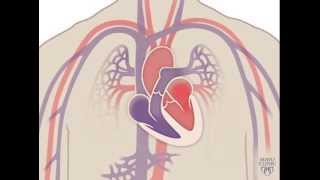
The Heart and Circulatory System - How They Work
TL;DR
This video explains the heart's function as a dual-action pump, detailing the circulatory system, the mechanics of a heartbeat (systole and diastole), the role of valves, and the electrical and coronary systems that keep the heart functioning.
Key insights
The Heart as a Dual-Action Pump
- The heart is a muscular organ, roughly the size of a fist, divided into right and left sides to prevent oxygen-rich and oxygen-poor blood from mixing.
- The right side receives deoxygenated blood, pumps it to the lungs for oxygenation, and the left side receives oxygenated blood, pumping it to the rest of the body.
- Four valves (tricuspid, mitral, pulmonary, aortic) act as one-way gates, ensuring blood flows in the correct direction and opening/closing with each heartbeat.
The Mechanics of a Heartbeat
- A heartbeat consists of two phases: systole (contraction) and diastole (relaxation).
- During systole, the ventricles contract, forcefully ejecting blood into the pulmonary arteries and the aorta.
- During diastole, the ventricles relax and refill with blood from the atria, preparing for the next cycle.
Essential Support Systems for the Heart
- The heart itself is nourished by coronary arteries that branch over its surface, supplying it with oxygen-rich blood.
- An electrical conduction system, originating in the right atrium and traveling through specialized pathways to the ventricles, regulates the coordinated beating of the heart.
- This electrical system ensures a normal rhythm, which is crucial for continuous blood circulation and sustaining life.
Key moments
- 00:00Introduction to the heart as a muscular pump, its size, location, and division into right and left sides to separate blood oxygen levels.
- 00:16Overview of the cardiovascular system and the heart's immense workload, pumping approximately five quarts of blood per minute and beating over 100,000 times daily.
- 00:36Explanation of the blood flow through the right side of the heart: oxygen-poor blood returns, is collected by the right atrium and ventricle, and pumped to the lungs via pulmonary arteries.
- 00:53Oxygenation in the lungs turns blood red; this oxygen-rich blood then enters the left side of the heart (left atrium and ventricle) to be pumped to the body through the aorta.
- 01:08The function of the four heart valves (tricuspid, mitral, pulmonary, aortic) as one-way gates that ensure proper blood flow, opening and closing with each heartbeat.
- 01:32Detailed explanation of systole (contraction), where ventricles push blood out, and diastole (relaxation), where ventricles refill with blood from the atria.
- 02:09The heart's own nourishment system: coronary arteries supply the heart muscle with oxygen-rich blood through a network of vessels.
- 02:26The heart's electrical wiring: electrical impulses generated in the right atrium travel through specialized pathways to the ventricles, coordinating the heartbeat.
- 02:40The conduction system's role in maintaining a coordinated and normal heart rhythm, essential for continuous blood circulation and life.