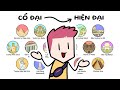
Toàn bộ về 7 kỳ quan thế giới từ cổ đại đến hiện đại
TL;DR
This video explores the "New 7 Wonders of the World," detailing their historical context, construction, and unique features, while also touching upon the criteria for their selection.
Key insights
The video discusses the "New 7 Wonders of the World" and the criteria for selection.
- It distinguishes between the "New 7 Wonders of the World" and the "7 Ancient Wonders of the World."
- The criteria for the "New 7 Wonders" include being man-made, completed before the year 2000, and relatively well-preserved.
- The selection process involved a global poll, with over 100 million votes cast online.
The video highlights several of the "New 7 Wonders of the World" with brief descriptions.
- The Great Wall of China is presented as the longest man-made structure, built over centuries for defense.
- The Colosseum in Rome is described as a venue for gladiatorial contests and public spectacles.
- Machu Picchu in Peru is noted for its unique stone construction and its location high in the Andes mountains.
- Petra in Jordan is recognized as the "Rose City" for its rock-cut architecture and its historical significance as a trade center.
The video touches upon the historical context and construction of some wonders.
- The Great Wall of China was built over various dynasties, with significant contributions from the Qin and Ming dynasties.
- The construction of the pyramids in Egypt is discussed, with theories about their purpose and the labor involved.
- The Taj Mahal in India is presented as a monument to love, built by Emperor Shah Jahan for his wife.
Key moments
- 00:01The video begins by introducing the concept of the "7 Wonders of the World," distinguishing between ancient and modern wonders.
- 00:11It explains that the "New 7 Wonders" were chosen through a global poll, highlighting the limitations of ancient wonders due to their disappearance.
- 00:20The video then poses the question: "What is a wonder of the world?" and suggests it's not just about being large and magnificent.
- 00:32It delves into the history of the "New 7 Wonders" campaign, initiated by New7Wonders Foundation.
- 00:50The criteria for becoming a "New Wonder" are listed: man-made, completed before 2000, well-preserved, and representing at least one wonder per continent.
- 01:32The first modern wonder discussed is the Great Wall of China, noting its immense length and historical significance.
- 03:37The video transitions to discussing the ASUS ExpertBook P Series laptops, highlighting their durability and business-oriented features.
- 04:44It reiterates the Great Wall of China's total length and its UNESCO World Heritage status.
- 05:55The Colosseum in Rome is introduced, detailing its construction timeline and its purpose as a venue for gladiatorial contests and public spectacles.
- 08:50The video explains the social hierarchy reflected in the seating arrangements at the Colosseum.
- 10:44The Christ the Redeemer statue in Rio de Janeiro, Brazil, is presented as a symbol of faith and a major tourist attraction.
- 12:42Petra, the "Rose City" in Jordan, is highlighted for its rock-cut architecture and its historical role as a trade hub.
- 14:26The Taj Mahal in India is described as a monument to love, built with marble and precious stones, and known for its changing colors throughout the day.
- 17:30Machu Picchu in Peru, the "Lost City of the Incas," is discussed for its impressive stone construction and its mysterious abandonment.
- 19:41The pyramids of Giza in Egypt are presented as ancient wonders, with theories about their construction and purpose as tombs for pharaohs.
- 22:01The Hanging Gardens of Babylon are mentioned as a legendary wonder, though their existence is debated.
- 22:42The Statue of Zeus at Olympia is described as a magnificent sculpture that was unfortunately destroyed.
- 25:15The Lighthouse of Alexandria, one of the ancient wonders, is noted for its impressive height and its eventual destruction by earthquakes.