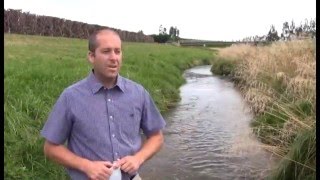
Water Quality Sampling
TL;DR
This video demonstrates the correct procedures for taking water quality samples on a property, emphasizing proper site selection, bottle preparation, sampling techniques for different parameters, and timely laboratory delivery.
Key insights
Proper water sampling technique is crucial for accurate water quality monitoring.
- Selecting the correct sampling location in a river (avoiding slumping banks and stagnant areas) is essential.
- Pre-sampling preparation, including labeling bottles and noting environmental conditions, is important.
- Specific procedures for rinsing bottles and filling them are necessary to avoid contamination and ensure representative samples.
Different water quality parameters require specific sampling bottles and methods.
- Larger bottles are used for nitrates, phosphorus, and ammonia.
- Smaller, sterile bottles are used for E. coli, requiring a different, non-rinsing technique.
- Maintaining sample integrity through proper handling and transport is vital.
Adherence to regulatory guidelines and timely laboratory analysis are key components of water quality monitoring.
- Otago water plan regulations dictate sampling procedures and bottle types.
- Samples must be kept cool and delivered to the laboratory within 24 hours for accurate analysis.
- Contact information is provided for further inquiries regarding sampling.
Key moments
- 00:22Introduction to basic water sampling for property owners, with Craig Simpson explaining the importance of monitoring water quality.
- 00:37Considerations for selecting the right sampling location in a river, avoiding areas with bank slumping or stagnant water, and opting for reasonably fast-flowing sections.
- 00:57The process of preparing for sampling, including labeling bottles with site name, date, and time, and noting environmental conditions like rainfall.
- 01:27Explanation of the two types of sampling bottles needed for different analyses: larger ones for nitrates, phosphorus, and ammonia, and smaller sterile ones for E. coli.
- 01:42Demonstration of the correct technique for entering the stream and filling the sample bottle, including plunging it underwater, tilting it upstream, and rinsing it three times for certain analyses.
- 02:45Specific instructions for sterile E. coli samples, which should not be rinsed to avoid contamination, and the importance of keeping samples cool and delivering them to the lab within 24 hours.